Uma Butler · 6 November 2026
Mossvale Utility Project Uncovers 19th-Century Pottery Kilns, Prompting New Excavations
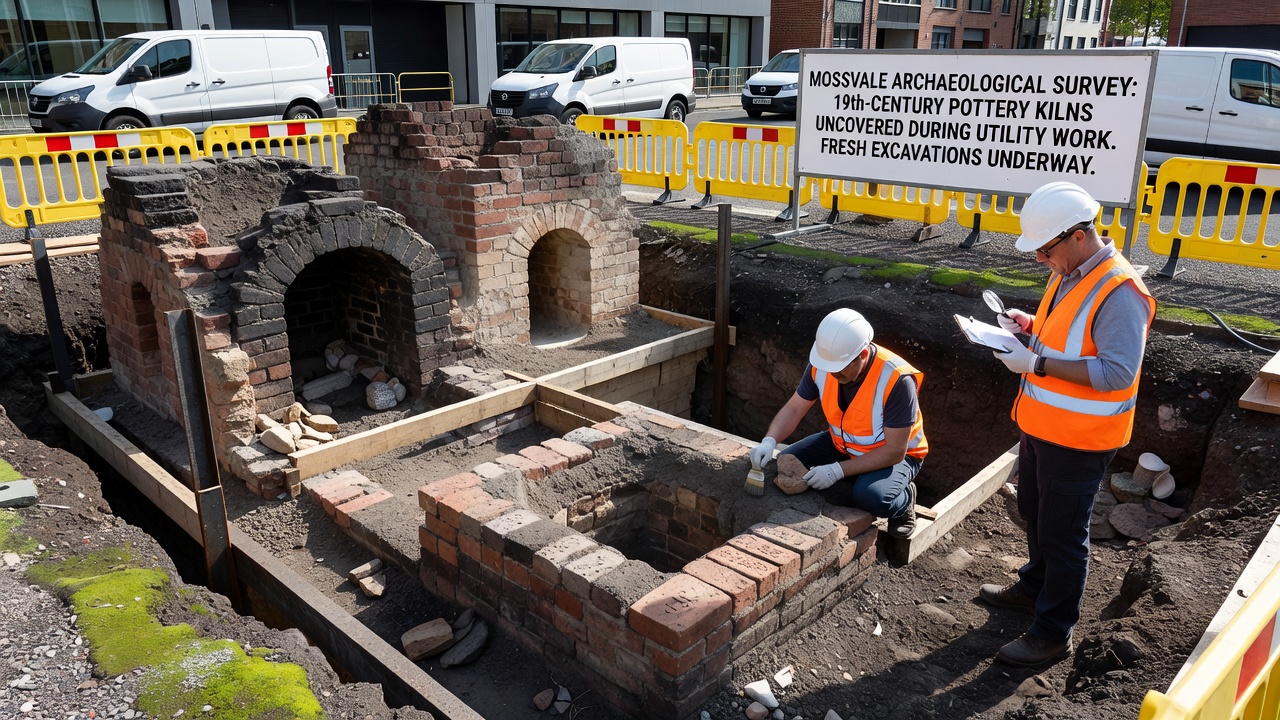
Utility upgrades along Mossvale's central corridors brought 19th-century pottery kilns into view in November 2026, and crews halted operations once the brick structures appeared beneath the street surface. Local authorities coordinated with heritage officers to document the find before any further ground disturbance occurred, and the exposure revealed circular kiln bases along with scattered waster heaps typical of industrial pottery production from that era. Observers note that such features often remain buried under modern infrastructure, so their sudden visibility during standard pipe replacement work created an immediate requirement for systematic recording.
Details of the Discovery
Contractors working on water main replacements first spotted the red-brick outlines at a depth of roughly two meters, and they marked the area while notifying the regional planning department within hours. The kilns stand adjacent to what historical maps identify as former clay extraction pits, and fragments of transfer-printed earthenware turned up in the spoil heaps beside the structures. Archaeologists from the county heritage service arrived the next day to photograph the exposed sections, and they confirmed that at least two updraft kilns remain intact below the current road level. Those who've studied similar sites know that the presence of multiple kilns in one location points to a concentrated production zone rather than isolated operations.
Historical Context of Mossvale Pottery
Records from the mid-1800s list several pottery works operating along the river valley that runs through Mossvale, and census returns show dozens of residents employed as throwers, saggar makers, and kiln setters during that period. The industry relied on local clay deposits and coal supplies transported along the nearby canal, and output included everyday tableware as well as industrial pipes and tiles. Research indicates that many of these works closed by the early 20th century as larger factories consolidated production elsewhere, leaving the kiln sites to be covered by later urban expansion. Evidence from surviving ledgers shows shipments reaching markets across northern England, and the newly uncovered structures align with the scale described in those documents.
Launch of Fresh Archaeological Surveys
Planning officers approved a phased survey program that begins with geophysical scanning of adjacent streets, and teams will follow up with targeted test trenches where anomalies appear. The work proceeds under scheduled monument guidelines that protect the exposed kilns while allowing limited excavation around their perimeters. Data collected so far includes soil samples from the kiln floors and measurements of the brick linings, and these will feed into a report scheduled for public release next spring. What's interesting is how the utility trenches already provide ready-made sections through the stratigraphy, reducing the need for additional digging in some areas.
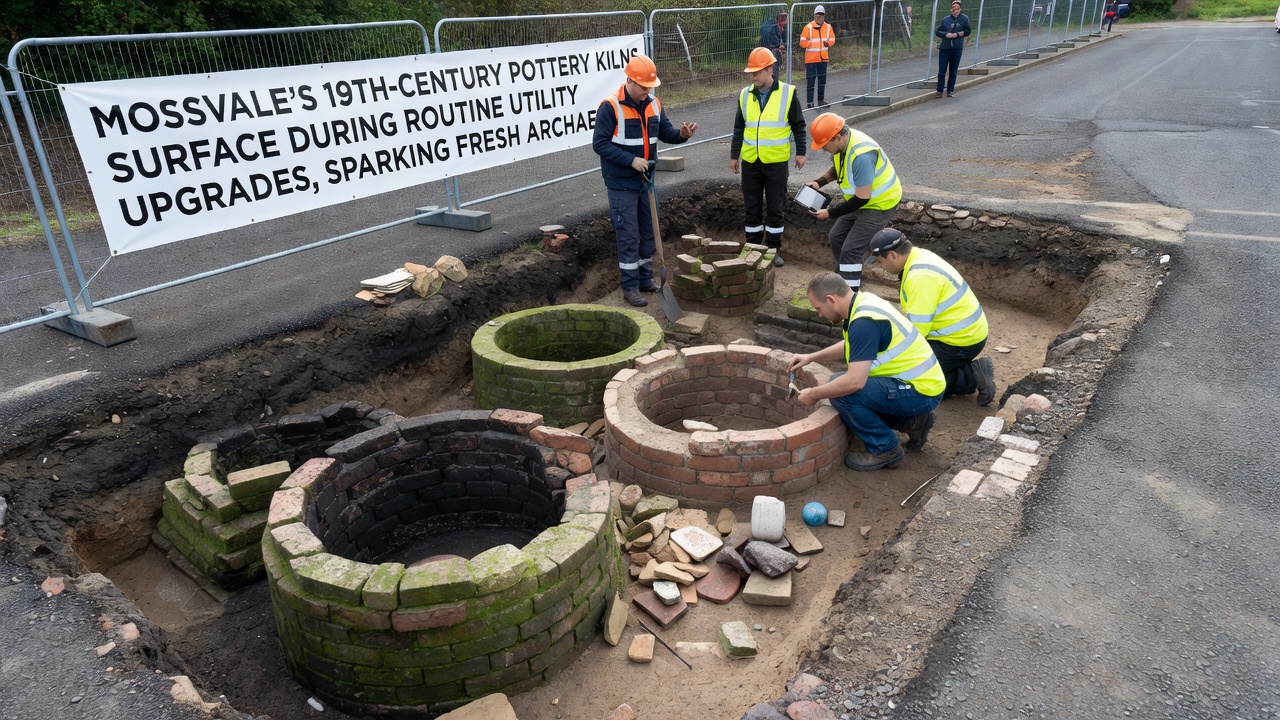
Survey leaders coordinate with utility companies to reroute certain pipe sections around the main kiln cluster, and this adjustment extends the overall project timeline by several weeks. Community updates appear on the council website each Friday, and residents receive invitations to view the finds during supervised site visits on weekends. According to preliminary assessments from the Historic England regional office, the kilns qualify as a non-designated heritage asset that merits preservation in situ where possible.
Regional Comparisons and Research Links
Similar kiln complexes have been documented in other former industrial towns, and comparative studies help place Mossvale's examples within broader patterns of 19th-century ceramic manufacture. A report compiled by researchers at the University of British Columbia outlines methods for dating kiln bricks through thermoluminescence testing, and those techniques may apply here once samples receive laboratory analysis. The survey also records any associated buildings such as workshops or drying sheds that might survive beneath neighboring properties. Figures from previous excavations in comparable settings reveal that up to 30 percent of original kiln fabric can remain after later development, which supports continued investigation at this location.
Community and Heritage Implications
Local history groups have begun compiling oral accounts from families whose ancestors worked in the pottery trade, and these narratives will accompany the physical evidence in future displays. School visits are already planned once safety barriers allow safe access, and the project provides an opportunity to connect classroom studies of industrial history with tangible remains. Observers note that such discoveries often prompt renewed interest in cataloguing other buried industrial features across the district before further infrastructure work takes place. The current surveys therefore include a wider corridor scan to identify any additional kiln sites that might lie along the same utility route.
Conclusion
The November 2026 discovery during routine upgrades has established a framework for ongoing archaeological work that integrates with the existing infrastructure timetable. Results from the geophysical surveys and test excavations will determine whether the kilns receive permanent protection or whether controlled recording precedes any necessary removal. Coordination between heritage specialists, utility contractors, and local authorities continues, and the process demonstrates how everyday maintenance projects can intersect with deeper layers of regional history. Future reports will detail the full extent of the site and its contribution to understanding Mossvale's industrial past.